Carbon Markets Course Package • Module 2 of 5
Global Climate Policies | Free & Certified
Understand Carbon Markets, Paris Agreement & Kyoto Protocol
Why Global Climate Policies Matter
Carbon markets don't exist in a vacuum; they are shaped by decades of global climate agreements such as the Kyoto Protocol and the Paris Agreement.
This free, self-paced climate policies course helps you understand how international climate rules influence carbon credits, carbon markets, and climate finance in practice. Understanding concepts such as Nationally Determined Contributions (NDCs), compliance markets, and international cooperation mechanisms is essential for anyone working with carbon credits, carbon projects, or climate finance.
Start your Course
This free, self-paced climate policies course helps you understand how international climate rules influence carbon credits, carbon markets, and climate finance in practice. Understanding concepts such as Nationally Determined Contributions (NDCs), compliance markets, and international cooperation mechanisms is essential for anyone working with carbon credits, carbon projects, or climate finance.

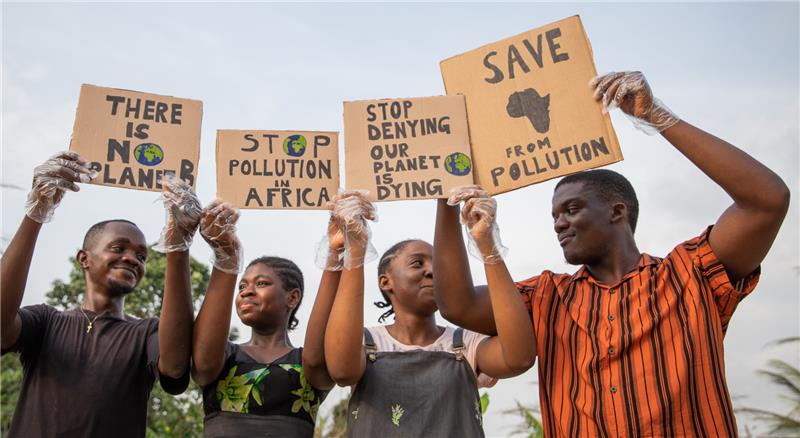
Common Challenges in Understanding Global Climate Policies

Conflicting National Interests.
Countries balance climate action with economic priorities, making global agreements difficult to align and implement.

Complex and Fragmented Governance.
Climate policies operate across global, national, and local levels, creating coordination challenges and policy gaps.

Economic and Equity Tensions.
Differences between countries lead to debates about responsibility, funding, and fairness.

Political and Social Barriers.
Changing political priorities, public resistance, and competing interests can slow or weaken climate policy implementation.
After Completing This Course, You Will Be Able To:
- Identify key international climate agreements that shape global climate action (UNFCCC, Kyoto Protocol, Paris Agreement).
- Explain the core carbon market mechanisms introduced under Kyoto.
- Describe why the Paris Agreement is significant for today’s climate action and carbon crediting.
- Explain the role of national commitments in global climate governance and market demand.
Who This Course Is For
- NGO professionals and policy advocates
working on climate governance, sustainability or carbon markets - Social entrepreneurs and project developers
seeking to understand how climate policy affects carbon project opportunities - Impact investors, consultants and foundation staff
interested in climate finance and carbon market development - Learners progressing through the Carbon Crediting Package
building on Module 1 (Basics of Climate Change)
Course At a Glance

Self-paced online course
learn anytime, anywhere, at your own pace.

30-45 minutes course
depending on template use.

Ready-made templates and worksheets
on Global Climate Policies.

Verified completion badge
blockchain-secured via Open Badge Factory.

Earn a Free Digital Certificate – Shareable and Fraud-Protected.
You’ll earn a unitary digital badge after finishing all required components and scoring 80% or higher on the quiz.
Complete all 5 courses in the Carbon Markets Course Package to receive a compound badge & certificate and showcase your knowledge on Carbon Markets & Climate Change.
Earn your free certificate
Complete all 5 courses in the Carbon Markets Course Package to receive a compound badge & certificate and showcase your knowledge on Carbon Markets & Climate Change.
Related Courses
Expand your learning journey in the Carbon Markets Course Package!
Mechanisms of Climate Change
Learn how carbon pricing and market mechanisms are used to reduce emissions. This course introduces key concepts, instruments, and practical considerations. Start anytime.
% complete
Carbon Crediting
Learn how carbon pricing and market mechanisms are used to reduce emissions. This course introduces key concepts, instruments, and practical considerations. Start anytime.
% complete
Carbon Projects
Learn how carbon pricing and market mechanisms are used to reduce emissions. This course introduces key concepts, instruments, and practical considerations. Start anytime.
% complete
Carbon Pricing
Learn how carbon pricing and market mechanisms are used to reduce emissions. This course introduces key concepts, instruments, and practical considerations. Start anytime.
% complete
FAQ – Global Climate Policies Course
The Paris Agreement is an international climate treaty adopted in 2015 under the UNFCCC, which entered into force in 2016.
Its central goal is to limit global average temperature rise to well below 2°C above pre-industrial levels, and to pursue efforts to limit it to 1.5°C.
Unlike the Kyoto Protocol, it applies to all countries and operates through Nationally Determined Contributions (NDCs) — voluntary national climate plans that countries are required to update every five years with increasing ambition.
NDCs are national climate action plans that each country submits under the Paris Agreement.
They set out each country's targets for reducing greenhouse gas emissions and adapting to climate change.
NDCs directly shape carbon market demand: countries with ambitious targets may develop domestic carbon pricing systems, and international carbon crediting can help countries meet their NDC commitments through mechanisms like Article 6 of the Paris Agreement.
The Paris Agreement introduced Article 6, which provides a framework for countries to cooperate on emissions reductions — including through international carbon credit transfers.
It also introduced corresponding adjustments — accounting rules to prevent double-counting of emission reductions between countries.
These changes are reshaping the rules for how carbon credits can be used globally, affecting both compliance and voluntary markets.
The Kyoto Protocol (1997) established three key mechanisms: Emissions Trading (ET) — allowing countries to trade surplus emission allowances; the Clean Development Mechanism (CDM) — enabling developed countries to invest in emission-reduction projects in developing countries and earn tradable credits; and Joint Implementation (JI) — similar project-based cooperation between developed countries.
The CDM laid important groundwork for voluntary carbon markets and project-based crediting systems still used today.
Yes — the course is completely free.
Upon successful completion, you earn a blockchain-secured digital unitary badge via Open Badge Factory at no cost.
Start Your Global Climate Policies Course Today.
Learn how the UNFCCC, Kyoto Protocol & Paris Agreement shape carbon markets.